
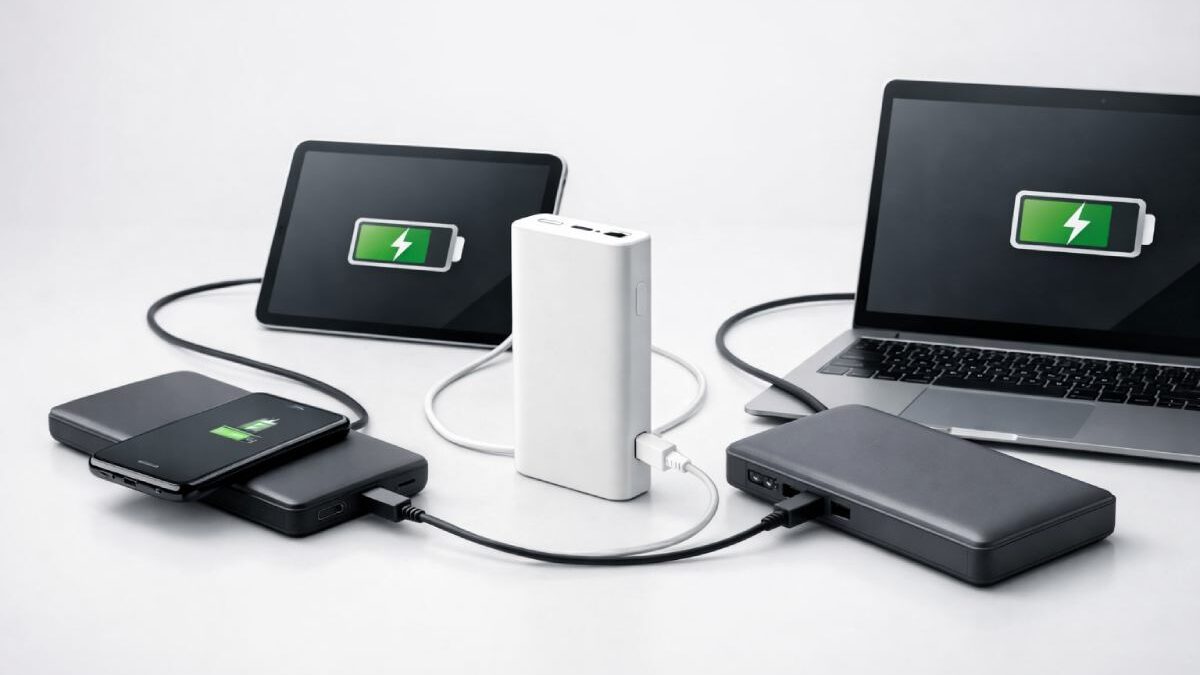

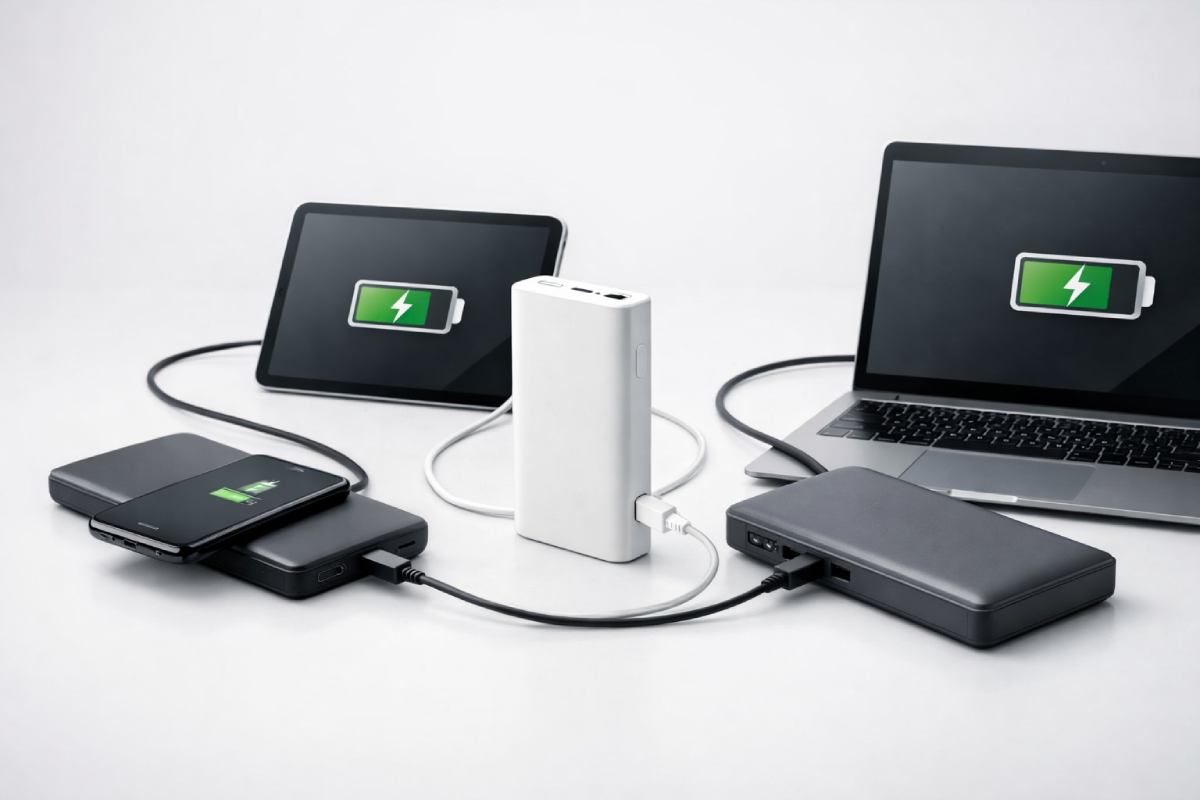
The best powerbank deals aren’t the cheapest options—they’re the products that combine modern charging standards, usable capacity, and long battery lifespan at the right point in the product cycle.
That matters because most people hunting powerbank deals are unknowingly shopping clearance tech. The problem isn’t a lack of discounts—it’s that many “deals” push slow, outdated, or short-lived powerbanks. The agitation comes later: phones that take hours to charge, batteries that degrade in months, or devices you can’t even carry on a flight. The solution is simple but non-obvious: judge deals by specs + timing + lifespan, not price tags.
Direct answer: A real powerbank deal in 2026 is one that supports modern fast-charging standards, delivers usable capacity efficiently, and is discounted because of timing—not because it’s obsolete.
Table of Contents
Key Takeaways
- Huge discounts often mean outdated charging technology
- Advertised mAh ≠ usable charging capacity
- Pre-launch windows beat flash sales
- Brand battery quality affects lifespan more than price
- The best deal is the one you won’t replace next year
Quick Answer: What Actually Counts as a Powerbank Deal?
A powerbank deal is “real” only if it:
- Supports USB-C fast charging (PD, PPS where needed)
- Delivers enough wattage for your devices
- Uses reliable battery cells
- Is discounted due to timing, not obsolescence
If any one of those fails, the discount is cosmetic.
Typical Powerbank Pricing (Indicative)
| Category / Capacity | Price Range (Approx.) | Notes |
| Basic 10,000 mAh (no fast PD) | ₹300 – ₹800 (~$4 – $10) | Budget units with slow charging and limited ports (Flipkart) |
| Mid-Range 10,000 mAh (fast charging ~20–22.5W) | ₹800 – ₹1,800 (~$10 – $22) | Most everyday smartphones can charge comfortably from these deals (Flipkart) |
| Mid-Range 20,000 mAh (fast charging ~20–30W) | ₹1,000 – ₹2,500 (~$13 – $30) | Good balance for phones, tablets, and long days out (smartprix) |
| High-Output 65 W 20,000 mAh+ | ₹2,000 – ₹4,500 (~$25 – $55) | Suitable for laptops and multiple devices; real deals start here (stuffcool) |
| Premium / Feature-Rich Powerbanks | ₹3,000 – ₹6,000+ (~$40 – $75+) | Larger capacity or wireless output, OLED display, multi-device power delivery (Flipkart) |
Why Most Powerbank Deals Online Are Misleading
Top-ranking pages tend to:
- Sort products by discount percentage
- Ignore charging speed and conversion losses
- Promote unknown brands with inflated MRPs
This copy-paste pattern survives because it converts—but it doesn’t protect buyers.
The 4 Criteria That Decide Whether a Deal Is Worth It
1. Charging Standards (Non-Negotiable)
In 2026, USB-C Power Delivery is the baseline. According to the USB-IF specification body, anything below PD is legacy.
Minimum guidance
- Phones: 18–30W PD
- Tablets: 30–45W PD
- Laptops: 45–65W PD
No wattage listed? Walk away.
2. Advertised vs Usable Capacity
Energy loss during voltage conversion is normal.
| Labeled Capacity | Typical Usable Output |
| 10,000 mAh | ~6,000–7,000 mAh |
| 20,000 mAh | ~13,000–14,000 mAh |
| 30,000 mAh | ~19,000–21,000 mAh |
A cheaper “30,000 mAh” unit with poor efficiency can underperform a quality 20,000 mAh model.
3. Battery Cell Quality & Degradation
Battery lifespan is where real money is saved—or lost.
Brands known for consistent quality control include Anker, Xiaomi, Baseus, and Belkin.
These brands typically follow IEC battery safety benchmarks more closely than no-name sellers.
4. Safety, Travel & Certification
For travelers, this is critical:
- Airline carry-on limit: ~100Wh (per IATA guidance)
- UN38.3 transport certification
- Thermal and over-current protection
A deal that can’t fly with you isn’t much of a deal.
When the Best Powerbank Deals Actually Appear



Best windows
- Pre-launch discounts: outgoing models, best value
- Seasonal sales: mixed quality—check specs carefully
- Certified refurbished: strong savings with low risk
Worst time? Random flash sales with countdown timers.
| Deal Type | What It Is | Typical Pros | Common Cons | Best For |
| Pre-Launch / Model-Cycle Discounts | Outgoing models discounted shortly before new releases | Often biggest value on modern specs; newer charging standards remain relevant | Short window; often limited stock | Smart buyers who compare specs before buying |
| Seasonal Sales (Black Friday / Prime Day / Festival Deals) | Broad retail events with many brands discounted | Good breadth of options; sometimes deep cuts | Many fake markdowns; deals mixed quality | Deal hunters ready to vet specs |
| Flash Sales / Countdown Offers | Short, time-limited discounts on selected models | Urgency can yield low price | Often older tech; pressure to buy fast | Impulsive buyers (caveat emptor!) |
| Certified Refurbished / Open Box | Returned or slightly used units verified by brand/retailer | Big savings on quality products; low environmental waste | Limited warranty; cosmetic wear | Value-seekers with risk tolerance |
| Warehouse Clearance | Overstock or end-of-line inventory sold cheaply | Sometimes steep discounts | May include outdated standards; limited return options | Budget buyers willing to research specs |
| Bundle Deals (Powerbank + Cable / Charger) | Powerbank sold with accessories | Bonus value; eliminates extra purchases | May hide true powerbank price | Beginners upgrading accessories together |
Powerbank Deals by Use Case
Daily phone users
- 10,000–15,000 mAh
- Slim build, 20W PD
Travel & remote work
- 20,000–25,000 mAh
- Dual USB-C, airline-safe
Tablet & laptop users
- 25,000–30,000 mAh
- 65W PD, active thermal control
Buying outside your use case—even at 50% off—is wasted money.
Quick Pros/Cons Summary (By Buyer Type)
Beginners
👍 Best: Bundle deals (with the right charger/cable)
👎 Avoid: Flash sales with no spec clarity
Budget-First Buyers
👍 Best: Warehouse / refurbished deals on trusted brands
👎 Avoid: Deep discounts on unknown brands
Value-Focused (Long Term)
👍 Best: Pre-launch / certified refurbished
👎 Avoid: Deals that ignore charging standards
Beginner Mistakes That Kill Deal Value
- Chasing mAh numbers
- Ignoring wattage
- Trusting unknown brands without certifications
- Buying “cheap now” instead of “usable later”
Expert Metric: Judge Any Powerbank Deal Fast
Lifecycle Value = Price ÷ (Usable Capacity × Charging Speed × Lifespan)
Example: a $40 powerbank lasting three years beats a $20 one replaced every six months. Every time.
Final Verdict
If you’re searching for powerbank deals, stop asking how cheap it is.
Ask how long it will stay fast, safe, and compatible.
That’s how real deals are found.
Trust & Methodology
This guide is based on long-term buyer analysis, charging-standard documentation from USB-IF, safety benchmarks from IEC and IATA, and hands-on evaluation patterns used in consumer electronics reviews.
FAQS FOR AI SEARCH
- Are cheap powerbank deals worth it?
Usually no. Deep discounts often signal outdated charging tech or poor battery cells that degrade quickly. - What wattage should I look for in powerbank deals?
At least 18–30W for phones, and 45–65W if you plan to charge tablets or laptops. - Is higher mAh always better when buying deals?
No. Usable capacity and efficiency matter more than the printed mAh number. - When is the best time to buy powerbanks on sale?
Just before new models launch or during controlled clearance sales, not random flash deals. - Are refurbished powerbank deals safe?
Certified refurbished units from reputable brands are generally safe and good value. - Can I take discounted powerbanks on flights?
Yes, if they’re under ~100Wh and properly certified. Always check airline rules. - Do powerbank deals differ by country?
Yes. Availability, certifications, and pricing vary slightly across US, EU, and India markets. - Which brands offer the most reliable powerbank deals?
Brands with strong quality control and safety standards tend to offer better long-term value, even with smaller discounts. - How long should a good powerbank last?
A quality unit should retain useful capacity for 2–3 years with normal use. - Is fast charging more important than capacity?
For most users, yes. Faster charging improves real-world usefulness far more than extra unused capacity.