
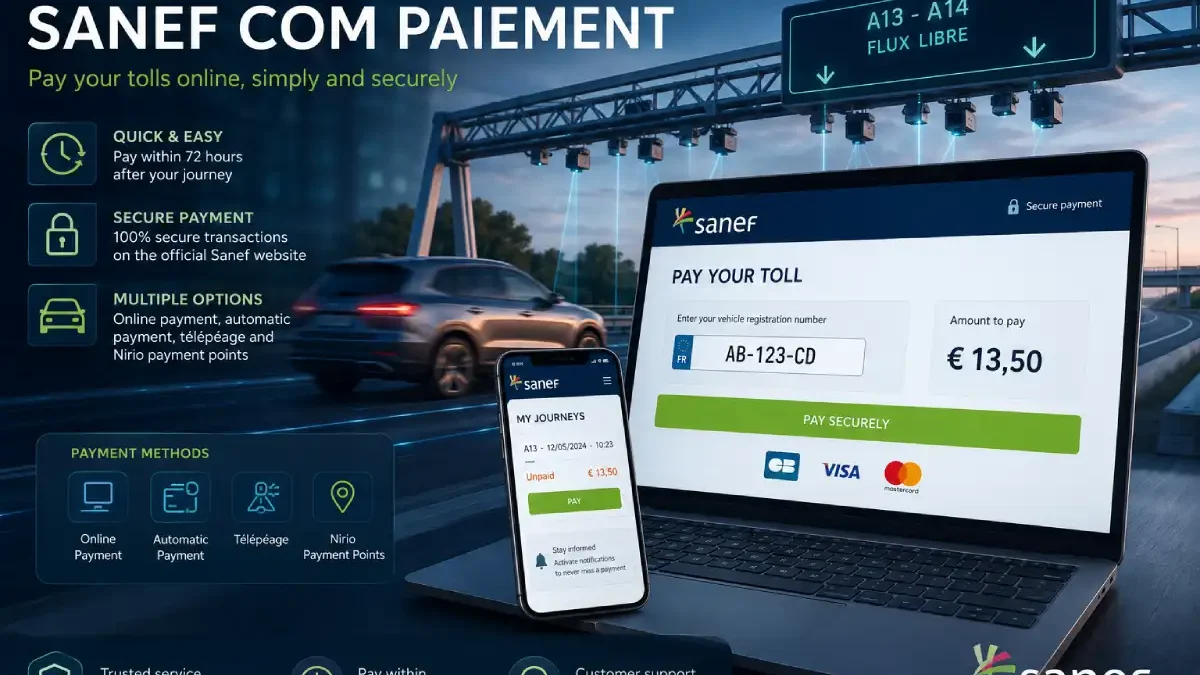

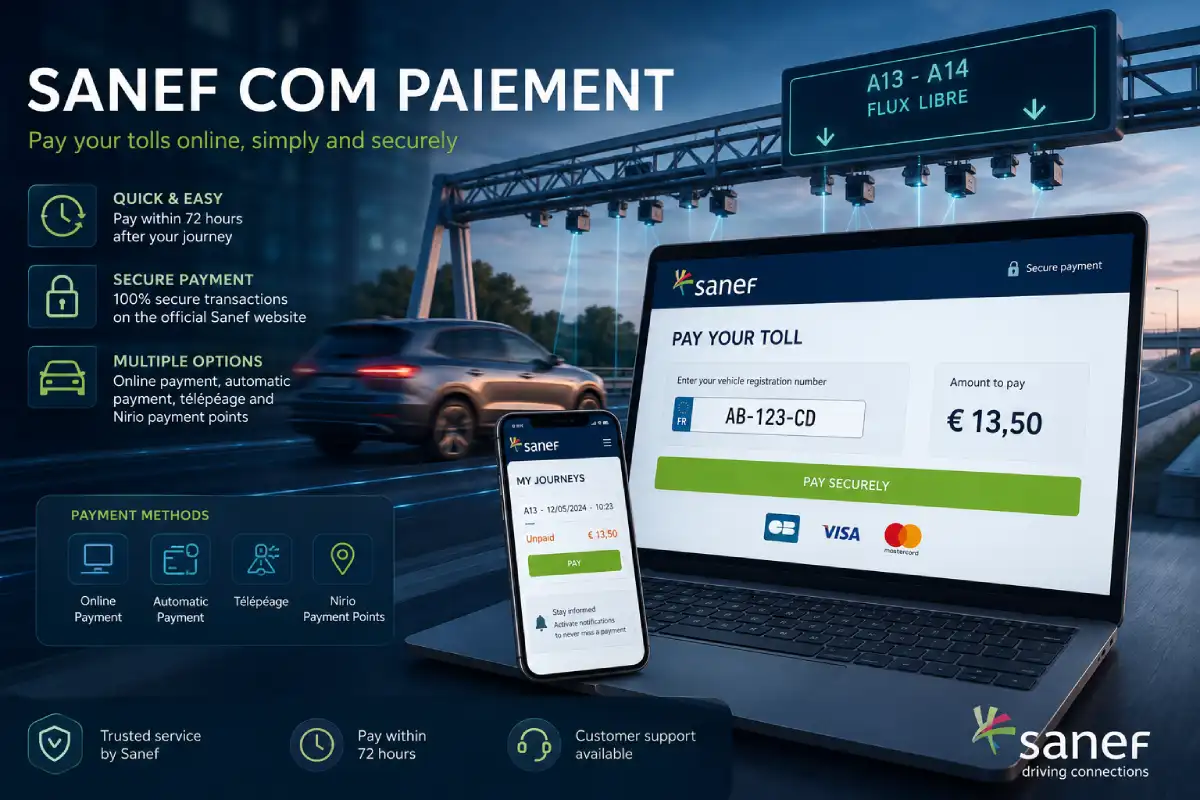
If you have searched for “sanef com paiement”, you are probably trying to understand how to pay a Sanef motorway toll, especially after driving on a free-flow toll road where there is no traditional payment barrier.
The system can feel confusing at first. You drive through the motorway without stopping, the vehicle is identified by its registration plate, and the payment is completed afterward. The important point is that free-flow does not mean free motorway travel. On the relevant Sanef routes, you still have to settle the toll within the required period.
This guide explains what Sanef com paiement means, how the payment process works, which payment methods are available, what happens if you forget to pay, and how to avoid fraudulent payment links.
Table of Contents
What Is Sanef Com Paiement?
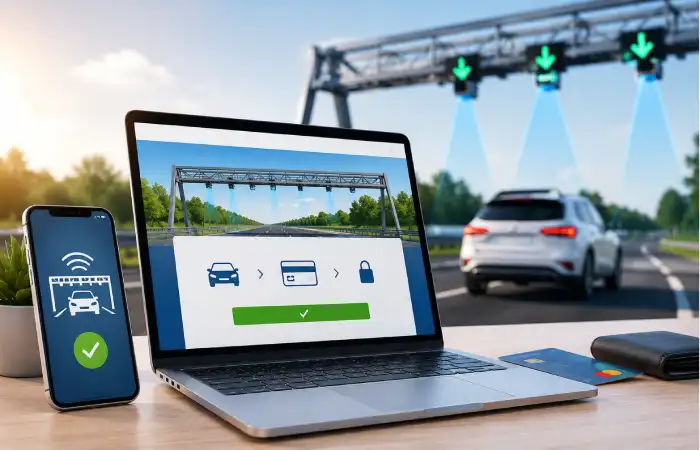
Sanef com paiement is commonly used as a search phrase by motorists looking for the official Sanef online toll-payment service.
Sanef operates motorways in France and provides several ways for drivers to pay toll charges. On traditional toll roads, payment normally happens at a physical toll station using a bank card, cash, or a télépéage badge.
The process is different on free-flow toll sections.
Instead of stopping at a conventional barrier, overhead equipment records the vehicle’s passage. Drivers without an automatic payment arrangement then need to pay afterward through the official Sanef website or an approved physical payment location. Sanef states that online payment for these free-flow journeys is available through its official website.
In simple terms:
You drive first, and payment is completed afterward.
That is the main idea behind free-flow tolling.
What Does “Free-Flow Toll” Actually Mean?
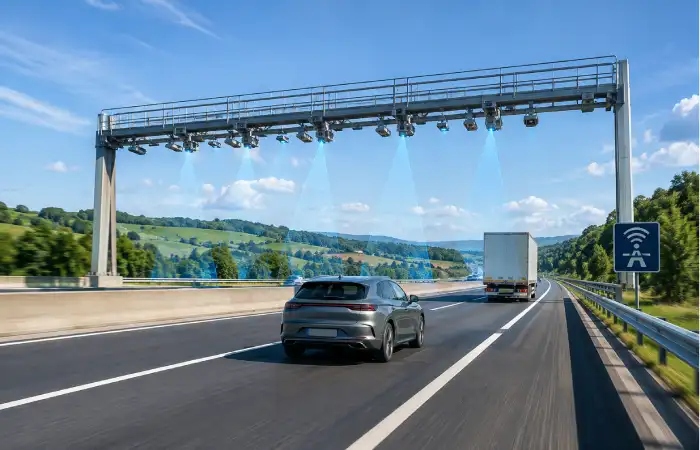
A free-flow toll is a road-payment system designed to remove traditional toll barriers.
Instead of:
Drive → stop → pay → barrier opens → continue
the journey becomes:
Drive → vehicle detected → continue → pay afterward
This can make a motorway journey smoother because drivers do not need to queue at a toll booth.
The Sanef free-flow system is particularly relevant to the A13 and A14 Paris–Normandy routes, as well as the Boulay-Moselle toll location on the A4.
However, there is one important detail that new users sometimes overlook: the absence of a toll barrier does not remove the toll charge.
How Does Sanef Com Paiement Work?
The process is relatively straightforward once you understand the sequence.
When a vehicle passes through a free-flow toll point, the system identifies the vehicle. If you have an eligible télépéage badge, the journey can be associated with your account automatically.
If you do not have a badge, you can generally use your vehicle registration number to locate the journey and make the payment online.
Sanef explains that motorists can either pay after each journey or create a customer account and activate automatic payment by associating their registration plate with a bank card.
The basic process
- Drive through the free-flow toll point.
- Your vehicle is identified.
- Visit the official Sanef payment website.
- Enter your vehicle registration details.
- Check the outstanding toll.
- Pay using an accepted bank card.
- Keep the payment confirmation for your records.
For occasional travelers, paying manually can be convenient. Regular users may prefer automatic payment.
How Long Do You Have to Pay?
This is one of the most important parts of the Sanef payment process.
For the relevant free-flow toll journeys, Sanef states that motorists have 72 hours after the journey to make the payment.
That means it is better not to treat the payment as something you can do whenever you remember.
For example, if you complete a journey on Monday afternoon, you should make sure the payment is completed within the applicable 72-hour period.
A useful habit is to pay as soon as you arrive at your destination. That removes the risk of forgetting.
Sanef Com Paiement: Payment Options Compared
There is more than one way to settle a Sanef free-flow toll. The best option depends on how frequently you use the motorway and whether you prefer manual or automatic payments.
| Payment method | How it works | Best for | Main advantage |
| Online payment | Enter vehicle details and pay through Sanef | Occasional travelers | Simple and direct |
| Automatic card payment | Link registration plate and bank card | Regular travelers | Reduces forgotten payments |
| Télépéage badge | Passage is detected automatically | Frequent motorway users | Convenient across eligible networks |
| Nirio payment point | Pay at an approved physical location | People preferring in-person payment | Useful alternative to online payment |
Sanef currently describes online payment, automatic payment, télépéage and approved physical payment locations as available solutions depending on the toll route.
Paying Online Through Sanef
For many motorists, online payment is the easiest solution.
Sanef says that online payments for the relevant free-flow tolls should be made through its official website. The company also warns users that other websites should not be used for this purpose.
You generally need your vehicle’s registration number and an accepted payment card.
The online method is particularly useful for:
- Tourists driving rental cars
- Occasional motorway users
- Drivers who do not have a télépéage badge
- People who prefer to pay each journey individually
Always check that you are using the genuine Sanef website before entering payment information.
Automatic Payment: A Convenient Alternative
If you frequently travel on free-flow sections, manually checking after every trip can become annoying.
Sanef offers an automatic payment option for applicable free-flow journeys. According to Sanef, customers can create an account, register their vehicle and associate a bank card so that eligible toll payments are handled automatically.
The biggest benefit is simple:
You do not have to remember to make a payment after every trip.
This can be particularly useful for commuters or people who regularly travel between Paris and Normandy.
However, it is still sensible to monitor your account and payment records. Automatic systems are convenient, but users should make sure their registration information and payment details remain correct.
What Is Télépéage?
Télépéage is an electronic toll-payment system that allows a vehicle to pass through eligible toll points using a small electronic badge.
Instead of manually paying at each toll, the system recognizes the badge and associates the journey with the customer’s account.
Sanef explains that a télépéage badge can also be used on free-flow sections, provided it is correctly installed in the vehicle. The journeys are then handled through the télépéage service rather than requiring the driver to manually pay each time.
For people who drive on French motorways frequently, this can be considerably easier than remembering individual payments.
Sanef Payment vs Télépéage
The two options solve the same basic problem, but they are designed for different driving habits.
| Feature | Online Sanef payment | Télépéage |
| Manual payment | Yes | Usually no |
| Registration required | Not necessarily for one-off payment | Yes |
| Useful for occasional trips | Excellent | Less necessary |
| Automatic handling | Optional through account | Core feature |
| Suitable for frequent motorway travel | Reasonable | More convenient |
| Coverage | Applicable Sanef free-flow journeys | Broader according to badge/service |
Sanef notes that télépéage offers wider motorway usability, while automatic bank-card payment is specifically applicable to its relevant free-flow sections.
So, if you only travel on the A13 once during a holiday, online payment may be perfectly adequate. If you regularly travel across France, a télépéage arrangement may make more sense.
What Happens If You Forget to Pay?
Forgetting the payment deadline is something motorists should take seriously.
Sanef explains that if the toll is not paid within the 72-hour period, an official payment notice can subsequently be issued and additional charges may apply.
According to Sanef’s current information, the additional charge can be reduced if the amount is settled within the specified period after receiving the notice. If the matter remains unresolved for longer, the potential financial consequences can become considerably higher.
The lesson is straightforward:
Do not wait for a letter to remind you about an unpaid toll.
If you know you have traveled on a free-flow toll road, check your payment status promptly.
How Can You Avoid Missing a Sanef Payment?
A few simple habits can prevent most problems.
1. Pay immediately after the journey
This is probably the easiest solution.
You arrive at your destination, open the official Sanef website, enter your vehicle information and settle the toll.
2. Create a Sanef account
For regular users, an account can make the process easier and can provide payment-related notifications.
Sanef says customers can activate notifications about tolls that need to be paid.
3. Consider automatic payment
If you repeatedly use the same free-flow routes, automatic payment removes one more task from your routine.
4. Keep your confirmation
After paying, save the confirmation or payment record. It can be useful if you later need to check whether a transaction was completed.
Is Sanef Com Paiement Safe?
The safest approach is to use only the official Sanef payment website.
This is especially important because free-flow toll systems have attracted phishing and SMS scams.
Sanef specifically warns that fraudulent messages may attempt to convince motorists to pay an alleged toll through a suspicious link. The company says it does not contact customers by SMS to demand toll payment through such links.
If you receive a message saying something like:
“Your toll is unpaid. Click here immediately to pay.”
do not automatically trust it.
Instead, open your browser yourself and navigate to the official Sanef website.
Warning signs of a fake payment request
Be cautious when a message:
- Creates extreme urgency
- Uses an unfamiliar website address
- Contains spelling or grammar mistakes
- Requests unusual personal information
- Asks you to click a shortened link
- Threatens immediate legal action
- Comes from an unexpected telephone number
The safest principle is simple: never make a toll payment through a suspicious SMS link.
Can You Pay Sanef Toll in Cash?
For certain free-flow journeys, motorists without online access have an alternative.
Sanef says payment can be made at approved physical payment locations in the Nirio network, where payment may be made by card or cash.
This is useful for people who are uncomfortable with online payments or do not have convenient internet access.
However, the same payment deadline applies, so using a physical location does not mean you can delay the payment.
Which Bank Cards Are Accepted?
For free-flow online payment, Sanef states that CB/Visa and Mastercard are accepted.
Traditional toll lanes can support additional card types depending on the payment equipment. Sanef lists Eurocard/Mastercard, Visa, Maestro and Electron among cards accepted at applicable toll lanes.
Because payment options can vary by service and toll point, it is sensible to check the current Sanef information if your particular card is not working.
Sanef Com Paiement for Tourists and Rental Cars
Visitors to France sometimes find free-flow tolling confusing because they are accustomed to paying at a physical toll booth.
The issue becomes even more important with rental vehicles.
If you are driving a rental car, make sure you understand who is responsible for the toll payment and whether the rental company has a télépéage arrangement. Do not assume that the absence of a barrier means the toll has already been settled.
If you are responsible for payment, keep the vehicle registration information available and check the official payment service after your journey.
This small step can save a much bigger administrative headache later.
Common Mistakes to Avoid
Assuming free-flow means free
It does not. Free-flow describes the method of collecting the toll, not the absence of a toll charge.
Waiting several days
The relevant payment window is 72 hours. Waiting increases the chance of missing the deadline.
Clicking a payment SMS
Sanef warns about fraudulent SMS messages. Go directly to the official website instead.
Entering the wrong registration number
Your vehicle registration is central to identifying the journey. Check every character carefully.
Not keeping proof of payment
A confirmation email, receipt or screenshot can be valuable if there is later a disagreement about whether the payment was completed.
Sanef Com Paiement: Advantages and Disadvantages
The free-flow system has clear benefits, but it also changes the driver’s responsibilities.
Advantages
- No traditional toll barrier on free-flow sections
- Smoother driving
- Less stopping
- Online payment available
- Automatic payment option available
- Physical payment alternatives exist
- Télépéage can simplify regular travel
Potential disadvantages
- Drivers must remember to pay
- The 72-hour deadline can be overlooked
- Rental-car users may be confused about responsibility
- Scam messages can create uncertainty
- Incorrect vehicle information can cause payment problems
The system is convenient once understood. The main challenge is simply remembering that the payment obligation continues even though the barrier has disappeared.
Sanef Com Paiement vs Traditional Toll Payment
| Point | Traditional toll | Free-flow Sanef toll |
| Barrier | Usually present | No traditional barrier |
| Payment timing | During journey | Usually after journey if not automated |
| Vehicle identification | Toll lane transaction | Registration/badge detection |
| Manual online payment | Generally unnecessary | Available |
| 72-hour payment rule | Not the normal process | Important for applicable free-flow journeys |
| Automatic options | Télépéage | Télépéage or eligible automatic card payment |
The major difference is timing. Traditional tolling puts payment directly into the driving experience. Free-flow separates the driving experience from the payment process.
That makes driving easier, but it also means the driver needs to remember the second step.
Frequently Asked Questions
What does Sanef com paiement mean?
It is a search phrase referring to Sanef’s online toll-payment service, particularly for motorists looking to pay free-flow motorway charges.
How do I pay a Sanef free-flow toll?
Use the official Sanef website, provide the requested vehicle registration information, identify the outstanding journey and pay with an accepted card.
How long do I have to pay?
For applicable Sanef free-flow toll journeys, you have 72 hours after the journey to make the payment.
Do I need a télépéage badge?
No. Drivers without a badge can use online payment or an approved physical payment option for applicable free-flow journeys.
Can I pay automatically?
Yes. Sanef provides an automatic payment option for eligible free-flow journeys when you create an account and associate your vehicle and payment information.
Can I pay at a physical location?
Yes. Sanef identifies approved Nirio payment locations as an option for applicable free-flow toll payments.
Are Sanef payment SMS messages genuine?
Be very careful. Sanef warns about fraudulent SMS messages requesting toll payments. Rather than clicking a link in a message, access the official Sanef website directly.
What happens if I do not pay within 72 hours?
A payment notice can be issued and additional charges may apply. Sanef provides different amounts depending on how quickly the subsequent notice is settled.
Final Thoughts on Sanef Com Paiement
The phrase “sanef com paiement” may look like a simple search for a payment page, but it represents a bigger change in the way motorway tolls are collected in France.
Free-flow tolling removes the familiar barrier and makes the actual driving experience smoother. At the same time, it shifts a small responsibility to the driver: remember to complete the payment after the journey unless an automatic system is already handling it.
For occasional travelers, the simplest approach is usually to pay online shortly after the journey. Frequent motorway users may prefer automatic card payment or télépéage. And regardless of the method, one rule deserves special attention: use the official Sanef website rather than payment links received through suspicious messages.