
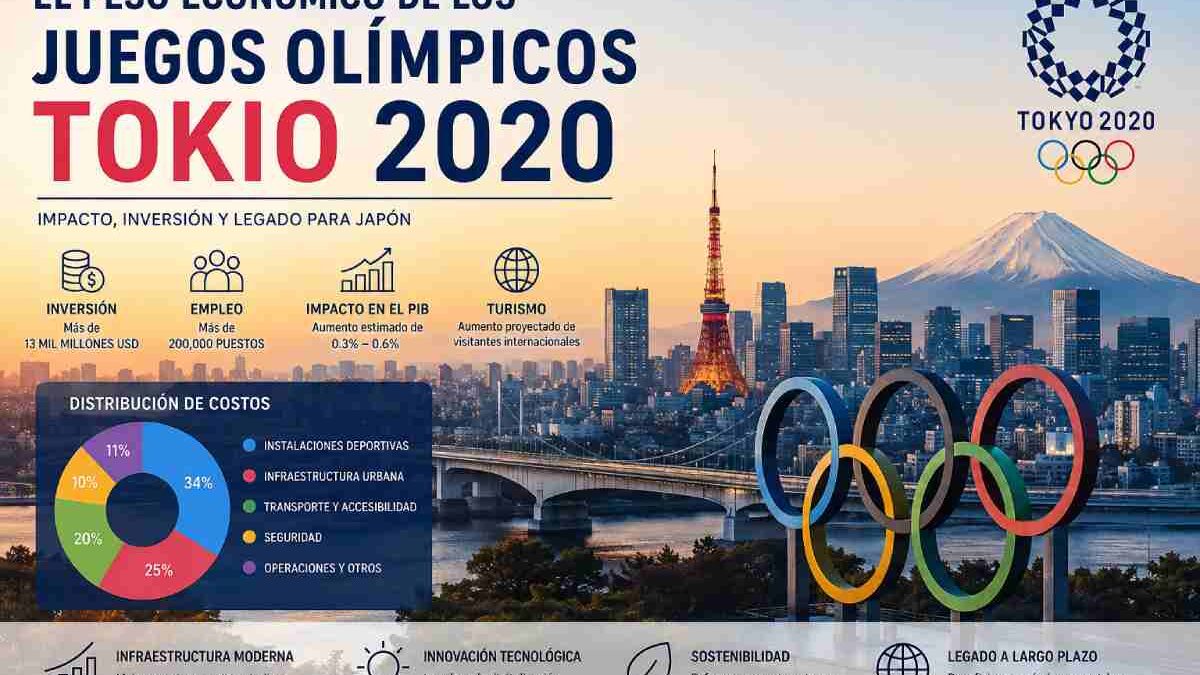

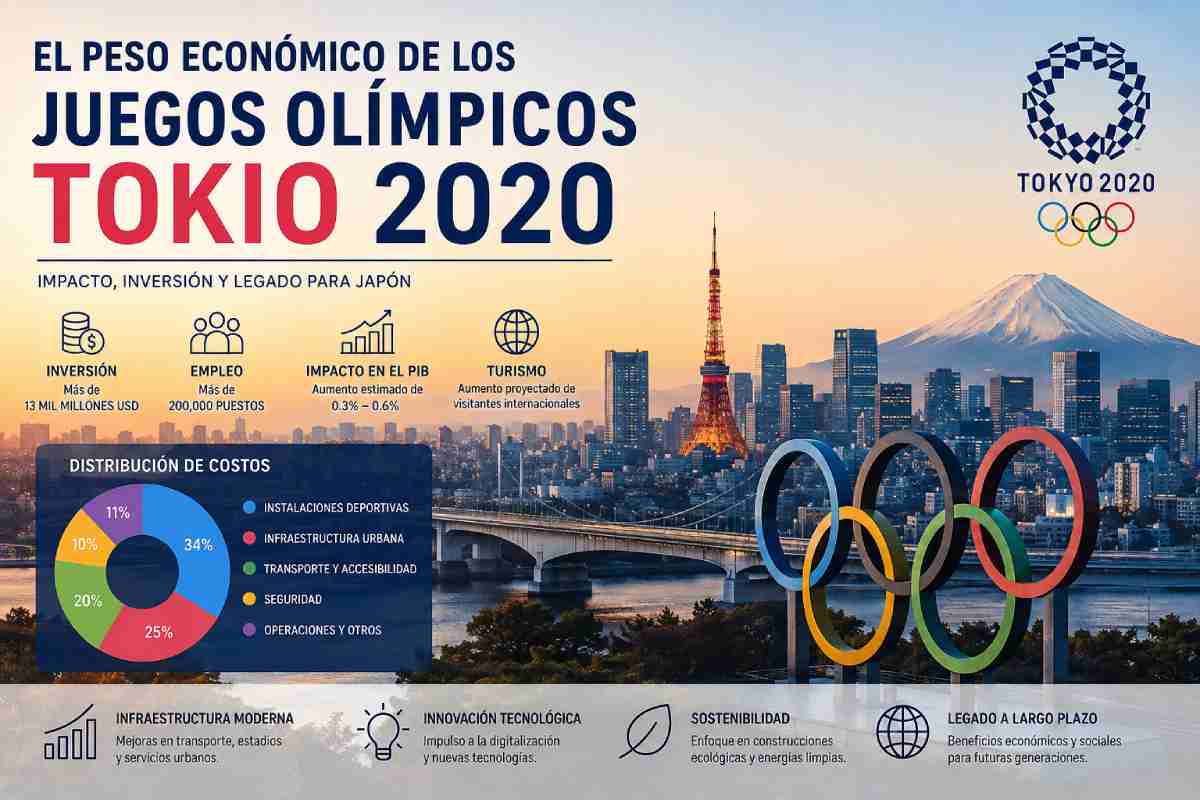
The 2021 Tokyo 2020 Olympic Games-the Games postponed to accommodate COVID-19- became one of the most unprecedented events in modern sport, pushing sporting performances to the limit and generating wide public debate regarding economic feasibility. All governments, economists, sports organizations, and taxpayers alike debated whether the billions poured into the Games yielded long-term value, or alternatively, incurred high financial costs.
Although it has always been understood that hosting the Olympics could boost a country’s economic prosperity, enhance its infrastructure and tourist potential, and raise its international stature, no Games came with such extraordinary hurdles to the anticipated financial performance-the lack of spectators, travel bans, increased costs of pandemic measures, etc-as those experienced by Tokyo 2020.
In this piece we discussed the economic significance of the Tokyo 2020 Olympic Games; the role these Games played in the Japanese economy, infrastructure, tourism, labor force, business and the long-term national development of the nation.
Table of Contents
What Is the Economic Impact of the Olympic Games?
An economic impact of Olympic Games represents the collective financial consequences on a nation or city by hosting such a large event. Economic impacts are government expenditure, investment in infrastructure, income generated by tourism, new job creation, increased business opportunities, international visibility, and long-term economic growth.
The impact can be divided into:
- Direct economic benefits
- Indirect economic benefits
- Long-term legacy benefits
- Financial costs and risks
More so than any regular sporting contest, the Olympics impact numerous sectors simultaneously and is therefore one of the world’s biggest economic events.
Understanding Tokyo 2020
The games that were expected in 2020 got delayed by a year due to the ongoing global Covid-19.
The Games were eventually held from:
- July 23 to August 8, 2021
But even without spectators from overseas and strict health protocols – well more than 11,000 athletes from 200-plus countries made it – the world around the spectacular event took on a very different economic form.
Why Were the Tokyo Olympics Economically Important?
Hosting the Olympics involved investments far beyond sports venues.
Japan invested in:
- Transportation
- Smart city technology
- Urban redevelopment
- Hotels
- Telecommunications
- Security systems
- Environmental sustainability projects
All of these investments now reap dividends for locals long after the Games are finished
Major Economic Objectives of Hosting the Olympics
The Japanese government expected several economic advantages.
These included:
-
Increasing tourism
- Creating employment
- Improving transportation
- Enhancing global reputation
- Stimulating local businesses
- Encouraging foreign investment
- Accelerating urban modernization
Many of these objectives were achieved only partially because of the pandemic.
Comparison Table: Expected vs Actual Economic Outcomes
| Economic Area | Expected Outcome | Actual Outcome |
| Tourism | Record international visitors | Severe decline due to travel restrictions |
| Hotel Industry | High occupancy | Significant losses |
| Retail Sales | Strong consumer spending | Reduced spending |
| Employment | Temporary job creation | Moderate employment gains |
| Infrastructure | Modern transportation improvements | Successfully completed |
| Global Branding | Positive worldwide exposure | Successfully achieved |
| Broadcasting Revenue | High earnings | Exceeded expectations |
| Ticket Revenue | Large income | Mostly lost because spectators were absent |
| Long-Term Legacy | Urban improvements | Still providing benefits |
Infrastructure Development
Infrastructural development-construction or enhancement of services needed for economic activity.
Tokyo invested heavily in:
- Roads
- Railway systems
- Airports
- Sports venues
- Telecommunications
- Urban redevelopment
Many of these improvements continue serving millions of residents today.
Unlike short-term spending, infrastructure often creates value for decades.
Transportation Improvements
Japan upgraded several transportation networks before the Olympics.
These improvements included:
- Railway modernization
- Better accessibility
- Airport enhancements
- Improved pedestrian areas
- Digital transportation systems
Good transportation means people spend less time traveling and the productivity goes up after the event ends and helps generate long-term profits for you long after your clients fly away.
Olympic Venues
Tokyo constructed and renovated several world-class stadiums.
Examples include:
- National Stadium
- Ariake Arena
- Aquatics Centre
- Olympic Village
Most were then reformed as civic sports centers and public use buildings.
Employment Opportunities
Lots of industries created employment due to the build up to the Olympics.
Jobs were created in:
- Construction
- Engineering
- Hospitality
- Security
- Transportation
- Event management
- Media
- Technology
Many temporary, though these provided a boost to economy during their preparation period.
Tourism Expectations
Tourism traditionally represents one of the largest financial benefits of hosting the Olympics.
Japan anticipated millions of international visitors.
Expected benefits included:
- Hotel bookings
- Restaurant spending
- Shopping
- Entertainment
- Transportation services
Unfortunately, international tourism nearly disappeared because spectators were prohibited from entering Japan.
This became one of the largest economic disappointments of Tokyo 2020.
The Role of Broadcasting Revenue
However, broadcasting still performed strongly. Hundreds of millions people all around the world watched it on TV/Internet stream.
Billions of money come from selling the rights to broadcast the Games-and it was the money that kept the sport going and sponsors interest despite empty stadiums:
Sponsorship and Corporate Investment
Large multinational companies continued supporting the Olympics.
Sponsors invested heavily in:
- Advertising
- Marketing campaigns
- Brand partnerships
- Athlete endorsements
- Digital promotions
Major sponsors recognized that worldwide television audiences remained enormous even without spectators.
Economic Challenges During COVID-19
The pandemic transformed nearly every financial assumption.
Challenges included:
- Event postponement
- Higher operating costs
- Health protocols
- Testing expenses
- Restricted travel
- Lost tourism
- Reduced ticket sales
- Lower local business revenue
These additional expenses significantly increased the total cost of hosting.
Government Spending
Japan invested billions of dollars preparing for the Olympics.
Government funding covered:
- Stadium construction
- Transportation upgrades
- Security
- Health measures
- Olympic Village
- Urban redevelopment
Although these investments increased public spending, many assets continue benefiting society today.
The Olympic Village Legacy
The Olympic Village became one of the event’s lasting economic assets.
After the Games, many buildings were converted into:
- Residential apartments
- Commercial spaces
- Community facilities
This redevelopment continues contributing to Tokyo’s housing market.
Technology Innovation
Tokyo showcased advanced technologies during the Games.
Examples included:
- Artificial Intelligence
- Robotics
- Facial recognition
- Automated translation
- Contactless payments
- High-speed internet
- Digital ticketing
These innovations demonstrated Japan’s technological leadership.
Environmental Sustainability
Tokyo emphasized sustainability throughout the event.
Projects included:
- Recycled Olympic medals
- Renewable energy
- Electric transportation
- Sustainable building materials
- Waste reduction programs
These initiatives strengthened Japan’s environmental reputation.
Impact on Local Businesses
Small businesses experienced mixed outcomes.
Some sectors benefited:
- Construction suppliers
- Technology firms
- Broadcasting companies
Others suffered:
- Hotels
- Restaurants
- Tourism operators
- Souvenir shops
Without international visitors, expected consumer spending never fully materialized.
Long-Term Economic Legacy
One of the most important questions is whether Olympic investments continue generating value.
Long-term benefits include:
- Better transportation
- Improved public infrastructure
- Modern sports facilities
- Enhanced international image
- Technology innovation
- Urban redevelopment
- Increased global visibility
These benefits may continue influencing Japan’s economy for decades.
Advantages and Disadvantages
| Advantages | Disadvantages |
| Improved infrastructure | Extremely high costs |
| Global visibility | Pandemic disruptions |
| Technology innovation | Lost tourism revenue |
| Better transportation | Limited ticket income |
| Employment creation | Budget overruns |
| Urban redevelopment | Heavy public spending |
| Sustainable facilities | Economic uncertainty |
Lessons Learned from Tokyo 2020
Tokyo demonstrated that large international events must be prepared for unexpected global crises.
Key lessons include:
- Flexible planning is essential.
- Emergency budgets should be included.
- Digital technologies improve resilience.
- Diversified revenue sources reduce financial risks.
- Long-term infrastructure often provides greater value than short-term tourism.
These lessons will influence future Olympic hosts.
Why Economists Continue Studying Tokyo 2020
Tokyo represents a rare economic case study because it combined:
- A global pandemic
- Massive public investment
- International media exposure
- Restricted tourism
- Advanced technology
- Sustainable development
Few events in history offer such a unique combination of economic variables.
Researchers continue analyzing its long-term effects on Japan’s economy.
Frequently Asked Questions
Was Tokyo 2020 profitable?
Direct profit of finance is limited by the pandemic, long term financial infrastructure or technology development are still bring benefits.
Why did Tokyo spend so much money?
Large investments were necessary for transportation, sports facilities, security, technology, and urban development.
Did tourism benefit?
Not significantly during the Games because international spectators were not allowed.
What industries benefited the most?
Shares in construction, IT, media, telecommunications, and infrastructure firms jumped the highest.
What is the biggest economic legacy?
One enduring legacy from your legacy includes new transport links, innovative infrastructure, better technology and urban development.
Final Words
The Tokyo 2020 Summer Olympic Games may live on in the collective memory of sports fans as a feat of athletic excellence and ingenuity, but it will also be synonymous with some unique financial phenomena. Economic realities for the Tokyo Games diverged from the financial norms for the Olympics. That reality was dictated partly by the pandemic’s obliteration of the tourism revenues a typical Summer Games has counted to make itself profitable for a host city.
At the same time, it can be readily acknowledged what an additional – and hopefully lasting – value is to a nation’s economy-and how Japan’s outlay on transit, tech, sustainability and the urban development of an already sophisticated, wealthy country could serve national interests in years to come.